What Is Air Wellness?
A practical system for paying attention to the air at home, without pretending one filter can solve every indoor-air problem.
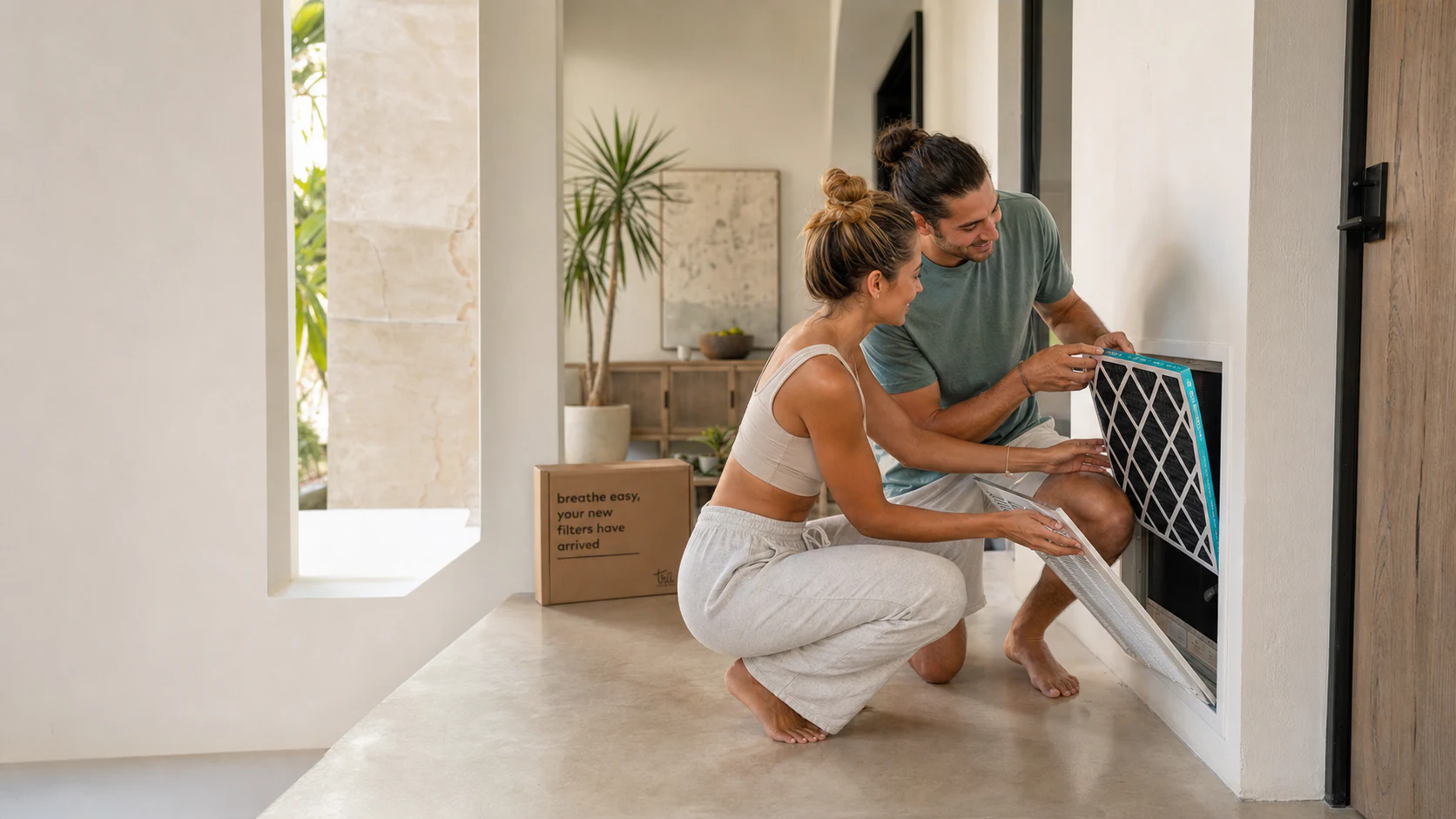
Air Wellness is TRU’s name for a repeatable approach to indoor-air care: reduce pollutants at the source, ventilate with suitable outdoor air when practical, and use filtration that fits the home and HVAC system. It is a household framework, not a medical standard. TRU helps with one part of it by making compatible filter replacement easier to keep on schedule.
Address controllable sources before asking a filter to do every job.
Ventilate when the home and current outdoor conditions make it appropriate.
Choose compatible filtration, verify the fit, and keep the cadence adjustable.
A useful category, not a diagnosis
People already organize wellness around food, movement, sleep and recovery. The indoor environment rarely gets the same deliberate attention, even though it surrounds daily life. Air Wellness gives that overlooked responsibility a simple name. It does not mean an HVAC filter treats illness, makes every room “healthy,” or guarantees a particular air-quality result. It means treating indoor air as a system that can be understood, checked and maintained. That distinction matters: a useful category should help a household make better decisions, not dress routine equipment maintenance in medical language.
Why indoor air deserves a routine
The U.S. EPA says people spend about 90% of their time indoors on average. Indoor air can contain particles and gases from outdoor air, cooking, cleaning, smoke, furnishings, building materials, moisture problems and ordinary household activity. Conditions can differ from one home to another and change during the day. That variability is exactly why a universal “perfect-air” prescription would be misleading. Air Wellness starts with attention: notice the sources, understand how the home moves air, and choose actions that match the actual building rather than a generic fear-based checklist.
Start where the pollution starts
Source control usually deserves the first look because it addresses pollution before the HVAC system is asked to manage it. Use exhaust fans while cooking when they vent outdoors. Store paints, solvents and other strong-emitting products according to their instructions and away from occupied areas when possible. Keep smoking outside. Fix water intrusion instead of expecting a filter to solve a moisture or mold problem. These are examples, not a complete inspection protocol. Radon, combustion concerns, persistent odors, visible mold or unexplained symptoms can require qualified testing, remediation or medical guidance beyond anything a replacement filter provides.
Ventilate with context
Ventilation can dilute indoor pollutants and exhaust them outdoors, but “open a window” is not responsible advice in every place or season. Outdoor smoke, high pollen, extreme heat, humidity and local pollution can make that choice unhelpful. Kitchen and bathroom exhaust, a home’s mechanical ventilation and short periods of window ventilation all work differently. Use equipment as designed, maintain it, and consider current outdoor conditions. If a home has combustion appliances, unusual pressure issues or a tightly sealed envelope, a qualified building or HVAC professional can help evaluate ventilation safely.
Use filtration as a supplement
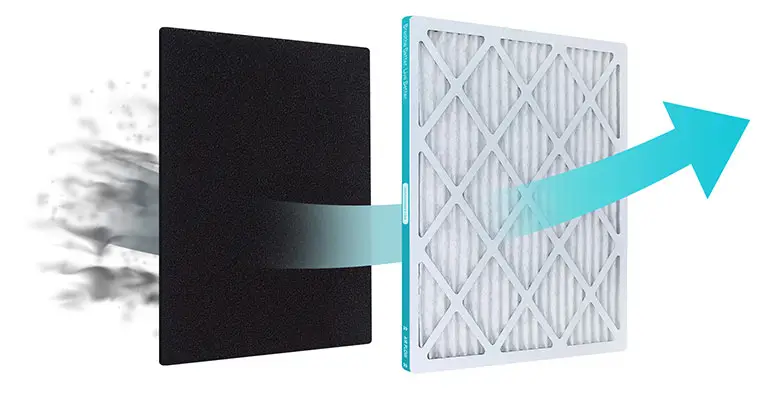
Filtration can complement source control and suitable ventilation; it does not replace them. A central HVAC filter treats air only when air is moving through that system, and no residential filter removes every pollutant. Particle filtration and gas filtration are also different jobs. MERV describes particle-filtration performance, while activated carbon is used for certain gases and odors. The result in a particular home depends on the pollutant, filter design, fit, airflow, system runtime and maintenance. A portable room air cleaner may also be useful in some situations, but it should be selected for the room and the intended pollutant rather than treated as a universal fix.
Choose for the system, not the slogan
For a central system, begin with the exact filter dimensions and the highest efficiency the equipment can accommodate. EPA consumer guidance recommends MERV 13 or as high as the system fan and filter slot can support; a technician can help when that limit is unclear. MERV alone does not tell you whether a specific filter will fit, what its airflow resistance is, or how it will behave as it loads. Check equipment guidance and available product data. A snug fit matters because air that travels around the frame is not being filtered by the media.
Turn maintenance into a learning loop
A useful routine is not “set it and forget it forever.” Start with the equipment and filter manufacturer’s guidance, then observe the home. System runtime, pets, renovation dust, occupancy and seasonal events can change how quickly a filter becomes loaded. Inspect it, note the date, and adjust the replacement rhythm when conditions change. The best schedule is the one that remains compatible with the equipment and responds to the household. Reminders and automatic delivery can reduce the memory burden, but they should stay editable rather than pretending every home operates on the same calendar.
Where TRU fits, and where it does not
TRU addresses the recurring central-HVAC filter task. Its filters use MERV 11 media with a carbon-backed layer, and its delivery model is designed to remember the selected size and cadence. That can remove a store trip and make replacement easier to repeat. It does not test the home’s air, remove pollutants at their source, determine whether outdoor ventilation is appropriate, or establish the highest rating a particular system can handle. MERV 11 is not the EPA’s highest-efficiency target. If a system supports a higher-rated option and that is the household’s priority, the homeowner should consider that guidance honestly.
A simple way to begin
Walk through the home with three questions. First: what can be reduced, repaired or exhausted at the source? Second: when and how does fresh outdoor air enter, and are current outdoor conditions suitable? Third: what filtration does the home use, does it fit, and when was it last checked? Record the filter size and installation date. Find the equipment guidance. Decide who owns the next check. Air Wellness becomes meaningful at that point, not because the air has been declared perfect, but because an invisible household input now has a clear, repeatable care plan.
Read the cited guidance.
U.S. EPA: Guide to Air Cleaners in the Home ↗U.S. EPA: What Is Indoor Air Quality? ↗Educational content only. Indoor-air conditions, HVAC systems, and individual circumstances vary.