
Air Wellness, Room by Room
A central filter creates one household baseline, but bedrooms, kitchens, nurseries, home gyms, and shared spaces each have different sources and priorities.
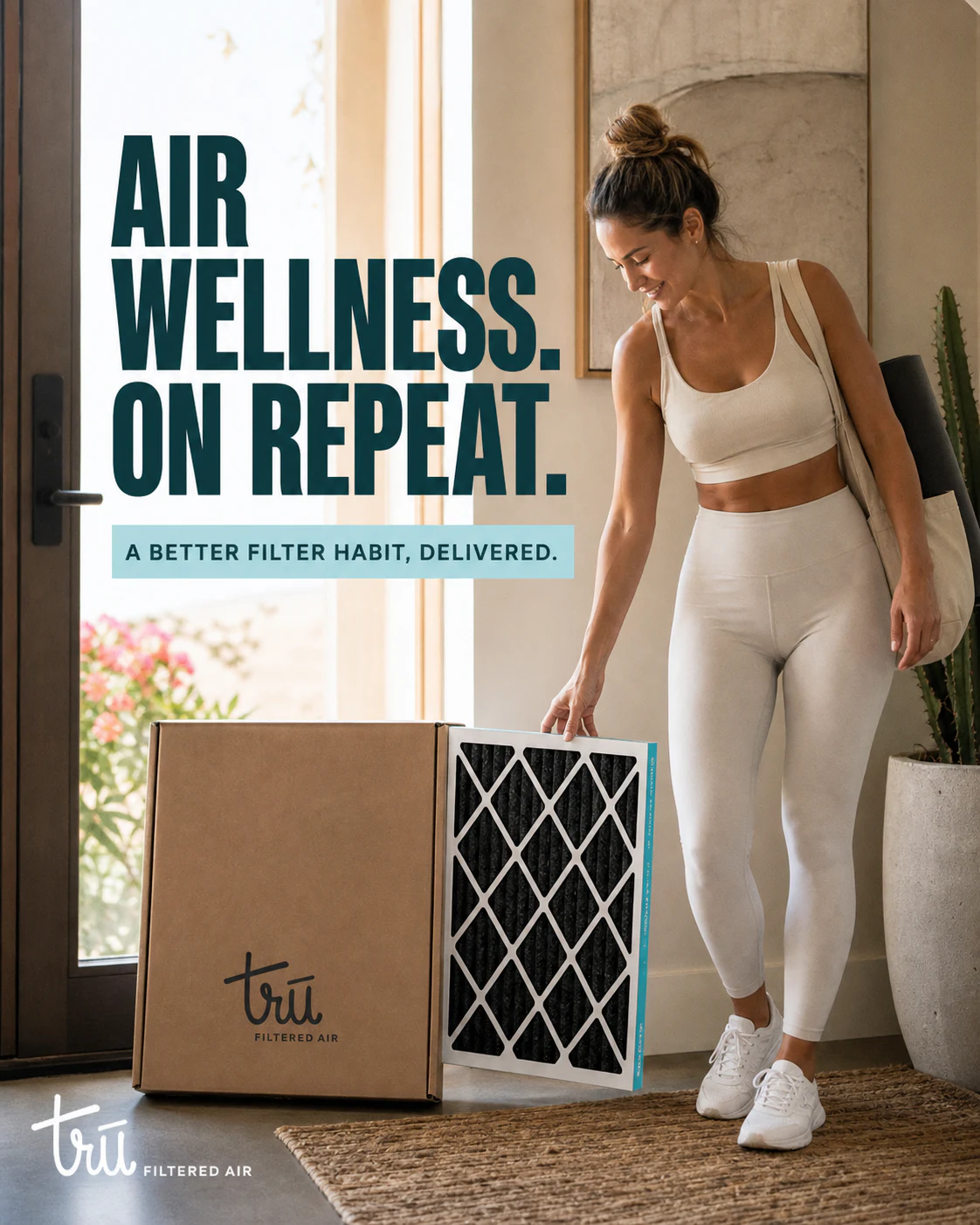
A central HVAC filter can contribute to particle reduction when the system moves air, but it cannot address every room-specific source. A useful Air Wellness plan combines whole-home filter maintenance with targeted source control, moisture management, exhaust, and context-aware ventilation.
Central filtration is a baseline, not a room-by-room guarantee.
Kitchens and bathrooms often need targeted exhaust and source control.
CO, radon, active mold, and moisture require different interventions.
Start with the whole-home baseline
Confirm that every return uses the correct filter size, that the frame fits snugly, and that the equipment can accommodate the selected efficiency. Record the installation date and inspect on a repeatable schedule. Keep supply and return vents unobstructed.
That establishes a maintenance baseline. It does not make every room identical. Door position, air pathways, local sources, moisture, occupancy, and exhaust all affect what happens in a specific space.
Bedroom
A bedroom often contains textiles, dust reservoirs, and, depending on the household, pets. Wash bedding according to its care instructions, clean with methods that avoid simply redistributing dust, and keep airflow paths open. If outdoor conditions are suitable, ventilation may be useful; during smoke, dust, extreme heat, or other poor conditions, it may not be.
TRU should not promise that a furnace filter improves sleep or prevents allergy symptoms. The responsible promise is more modest: compatible filtration can contribute to reducing airborne particles that reach the running system, while room care addresses other sources.
Nursery or children’s room
Keep the environment smoke-free, address water intrusion promptly, follow safe-product instructions, and keep air pathways unobstructed. Avoid adding strong fragrances under the assumption that a carbon-backed filter will neutralize them.
No HVAC filter creates a medically safe nursery or prevents illness. Health concerns belong with a qualified clinician, and building concerns such as active mold, combustion, or moisture require their own evaluation. Claims such as “protects your baby” do not belong in responsible filter marketing without appropriate product-specific evidence.
Kitchen
Cooking can generate particles and gases. When available, use a range hood that vents outdoors and operate it during cooking. Keep burners and appliances maintained according to manufacturer guidance. Avoid using the HVAC filter as a reason to ignore exhaust.
Ventilation decisions still depend on outdoor conditions and the home. A recirculating hood is not the same as outdoor exhaust. If combustion appliances or unusual pressure conditions are involved, qualified service matters.
Bathroom and laundry
Moisture is the primary Air Wellness issue in many bathrooms and laundry areas. Use exhaust that vents outdoors where available, address leaks, and manage humidity. EPA guidance recommends keeping relative humidity below 60%, ideally between 30% and 50% when practical.
A central particle filter does not repair a leak or remediate active mold. Persistent moisture, visible growth, or recurring damage requires source correction and possibly qualified remediation.
Home gym and family room
Home gyms can combine high occupancy, cleaning products, fragrance, and equipment materials. Use products as directed, reduce unnecessary emitting sources, and ventilate when outdoor conditions allow. Avoid claims that a filter increases workout performance, strengthens lungs, or accelerates recovery.
Family rooms may include candles, fireplaces, pets, upholstered furnishings, and many people. Each source calls for its own decision. Extinguishing or reducing a source can be more direct than asking the central filter to manage everything downstream.
Entry, garage, and utility zones
Entry mats, shoe routines, and regular cleaning can reduce tracked-in material. Keep the door between an attached garage and occupied space closed and properly maintained. Store strong-emitting products according to their labels.
A filter cannot detect or remove carbon monoxide safely enough to replace alarms, appliance maintenance, or professional evaluation. It also cannot remove radon. Those are separate household safety systems and should never be folded into a broad “clean air” promise.
A simple room-by-room rhythm
Weekly: reduce obvious sources, use exhaust, and keep airflow paths open. Monthly: inspect the central filter and check moisture-prone areas. Seasonally: review outdoor-air patterns, HVAC runtime, and whether the selected delivery cadence still makes sense.
The room-by-room framework gives TRU dozens of useful content angles without inventing product outcomes. One approved guide can become a bedroom carousel, a kitchen checklist, a monsoon email, a family-room post, and a community-response answer, all grounded in the same source set.
One approved answer becomes seven connected assets.
Room-by-room checklist
5 specialized carousels
Community answer library
Seasonal content cluster
Read the evidence behind the draft.
01U.S. EPA · Care for Your Air↗02U.S. EPA · Biological contaminants and humidity↗03U.S. EPA · Indoor particulate sources↗04U.S. EPA · Carbon-monoxide guidance↗Claim state: Green with explicit room and hazard limitations
Educational prototype only. Indoor-air conditions, HVAC systems, products, and individual circumstances vary. Product-specific claims require current TRU substantiation and owner approval.